The SELECT Project Timeline
- One of the major drivers of tropical forest degradation is selective logging. Hundreds of millions of hectares of tropical forest have been selectively logged globally. This is a major impediment to a sustainable forestry sector, degrades forest carbon stocks and biodiversity, and defrauds national economies, civil society, and businesses of tens to hundreds of billions of dollars annually.
- Between 2019 and 2022 a team at Sheffield University led research supported by the Grantham Centre for Sustainable Futures to develop and deploy an algorithm ensemble for assessment of high intensity (>20 m3 per hectare) selective logging over large areas of tropical forest using remote sensing approaches.
- In 2021 the team worked with the World Resources institute (WRI) and UKRI to develop our algorithm ensemble into a series of open-source toolboxes to monitor illegal tropical selective logging in conjunction with key stakeholders in Peru (OSINFOR).
- Since 2023 these tools have been evaluated and used operationally by OSINFOR to detect illegal selective logging across concessions in Peru.
- After two years of deployment in Peru, we worked together with OSINFOR and the University of Cambridge to develop the second phase of selective logging algorithm development that is capable of detecting low-intensity (<10 m3 per hectare) selective logging. This research was funded by NERC and STFC.
- Having developed and tested an approach to use our tools both in and beyond Peru, the Sheffield and Cambridge teams have begun collaborating with stakeholders from across the tropical moist forest region (Brazil, Congo, Malaysia) to deploy the tools across Tropical moist Forest regions. This research will be funded by Velux Stiftung.
- Please get in touch with the SELECT team for more information.
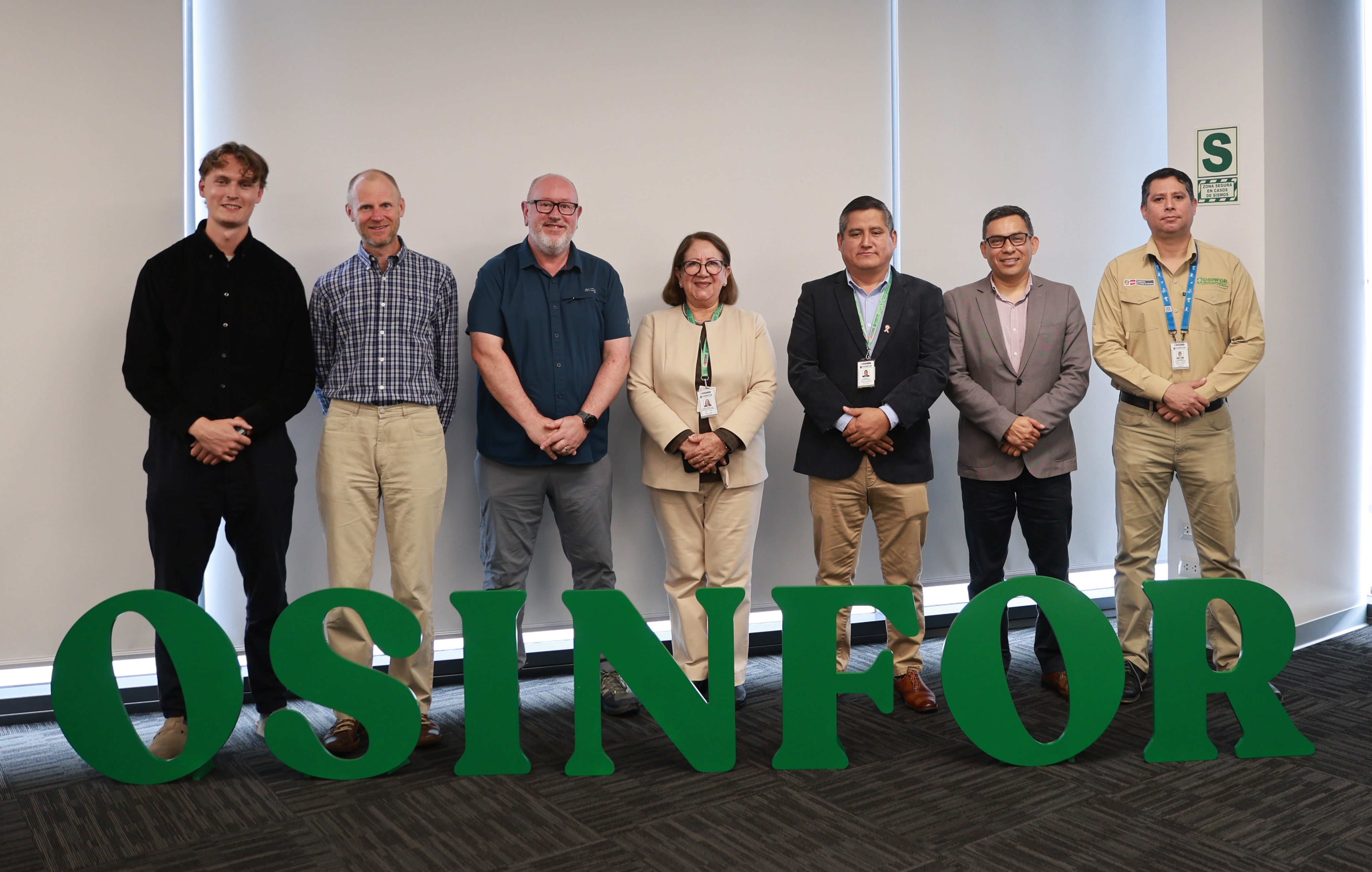
The SELECT team in Lima, Peru in July 2025
SELECT Project Papers
- Hethcoat, M.G., Edwards, D.P., Carreiras, J.M., Bryant, R.G., Franca, F.M. and Quegan, S., 2019. A machine learning approach to map tropical selective logging. Remote sensing of Environment, 221, pp.569-582. https://doi.org/10.1016/j.rse.2018.11.044
- Hethcoat, M.G., Carreiras, J.M.B., Edwards, D.P., Bryant, R.G., Peres, C.A. and Quegan, S., 2020. Mapping pervasive selective logging in the south-west Brazilian Amazon 2000–2019. Environmental Research Letters, 15(9), p.094057. https://doi.org/article/10.1088/1748-9326/aba3a4
- Hethcoat, M.G., Carreiras, J.M., Edwards, D.P., Bryant, R.G. and Quegan, S., 2021. Detecting tropical selective logging with C-band SAR data may require a time series approach. Remote Sensing of Environment, 259, p.112411. https://doi.org/10.1016/j.rse.2021.112411
- Hethcoat, M.G., Carreiras, J.M., Bryant, R.G., Quegan, S. and Edwards, D.P., 2022. Combining Sentinel-1 and Landsat 8 does not improve classification accuracy of tropical selective logging. Remote Sensing, 14(1), p.179. https://doi.org/10.3390/rs14010179
- Bousfield, C., Edwards, D.P., Hethcoat, M.G., Campos Zumaeta, L.E., Allccahuaman Mañuico, E., Minhuey Espinoza, Y.Y.A. and Bryant, R.G., 2026. Mapping low-intensity selective logging across the Peruvian Amazon. Environmental Research Letters. https://doi.org/10.1088/1748-9326/ae3787